1) Introduce pastel-colored throw pillows
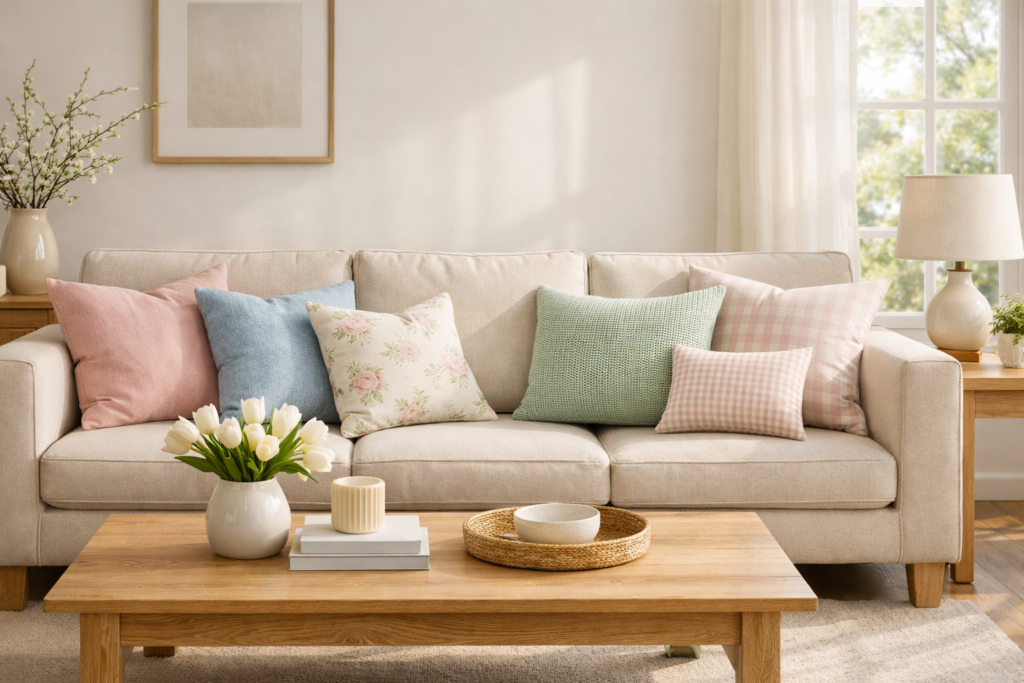
Choose a few pastel throw pillows to freshen your sofa without a big overhaul. Soft shades like blush pink, mint green, or light blue brighten the room and keep the look calm.
Mix solid colors with small patterns to add interest without clutter. A floral or gingham pillow in a pastel tone can tie other accents together and make the arrangement feel intentional.
Vary pillow sizes and textures for depth. Combine smooth linen with a knitted or velvet pillow to create a layered, cozy effect that still feels light for spring.
Place pillows asymmetrically rather than in perfect pairs to keep the setup casual. You can start with two larger pillows and add one or two smaller ones to break uniformity.
Use pastel pillows to connect to other decor items. Match them with a throw blanket, vase, or small rug to create a cohesive color story across the living room.
Keep maintenance in mind when selecting fabrics. Removable covers and machine-washable materials make it easy to refresh the look and handle seasonal spills.
2) Use floral-patterned curtains
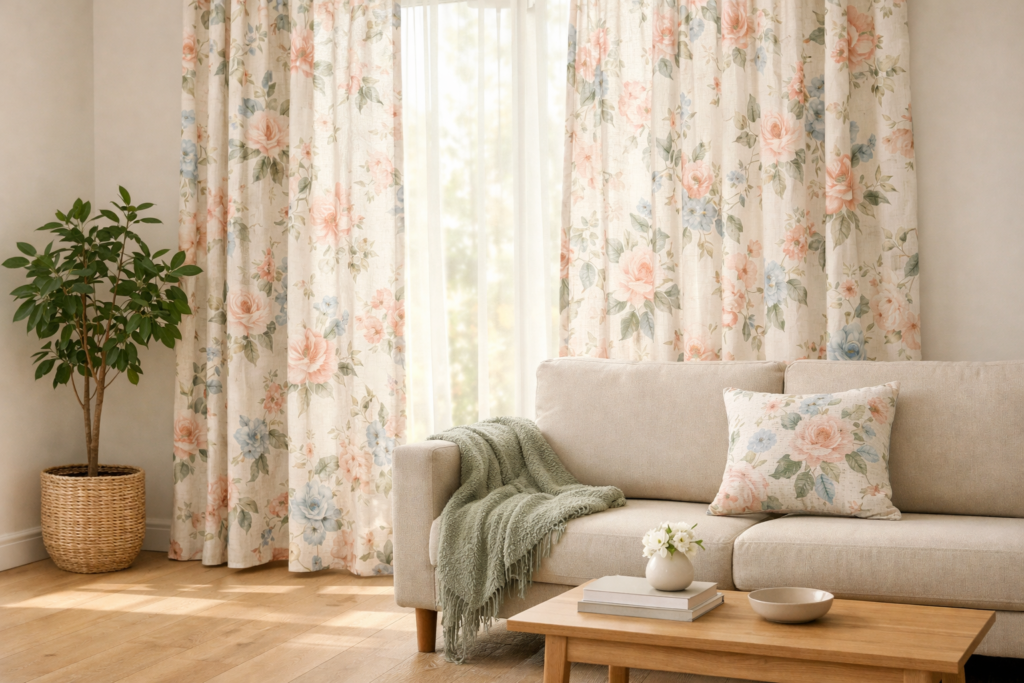
Floral curtains bring spring into your living room with little effort. You can swap them in and out each season to keep your space feeling fresh.
Choose a scale that fits your room. Large, bold blooms work well on plain walls and simple furniture, while small, ditsy prints suit busier patterns or vintage pieces.
Pick colors that tie into your existing palette. Match a hue from the curtain to a pillow or a rug to create a pulled-together look without buying all new items.
Think about fabric weight and light control. Sheer floral panels let sunlight filter through and soften the room, while heavier drapes add warmth and block glare when you need privacy.
Mix florals with solids and textures to avoid a look that feels too busy. A solid-color sofa or textured throw can balance the pattern and make the flowers feel intentional.
If you’re unsure about committing, try a single floral panel or cafe curtains on one window. This small change gives you a test run without overhauling the whole room.
3) Add a lightwood coffee table
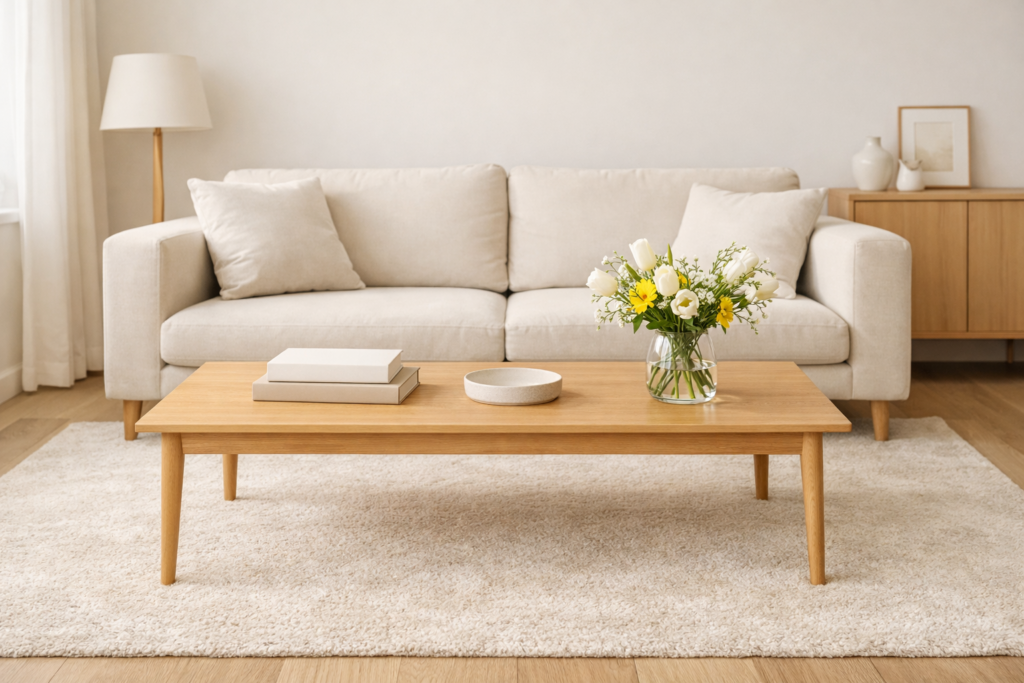
A lightwood coffee table brings instant brightness to your living room. It reflects natural light and makes the space feel open without changing other elements.
Choose a simple design with clean lines to keep the look modern and calm. You can pair a round table with soft seating or a rectangular one with a structured sofa.
Light woods like pine, oak, or ash fit many styles. They work with white, pastels, and muted greens for a fresh spring palette.
Keep the surface clutter-free. Add one or two small items—a stack of two books, a small vase with fresh flowers, or a ceramic tray—to create a tidy focal point.
Mix textures to add interest without heavy color. A woven runner, a glass vase, or a matte ceramic bowl contrasts nicely with the wood grain.
If your floor is also light, choose a table with a subtle tone difference or thin metal legs to add depth. For darker floors, a pale wood table will lift the entire room.
Maintain the table with a soft cloth and wood-safe cleaner to keep the finish smooth. Lightwood shows wear less obviously than dark finishes, but regular care preserves the look.
If you rent or like to switch styles, consider a lightweight table you can move easily. Portability helps you test layouts and try new arrangements each season.
4) Incorporate rattan or wicker furniture
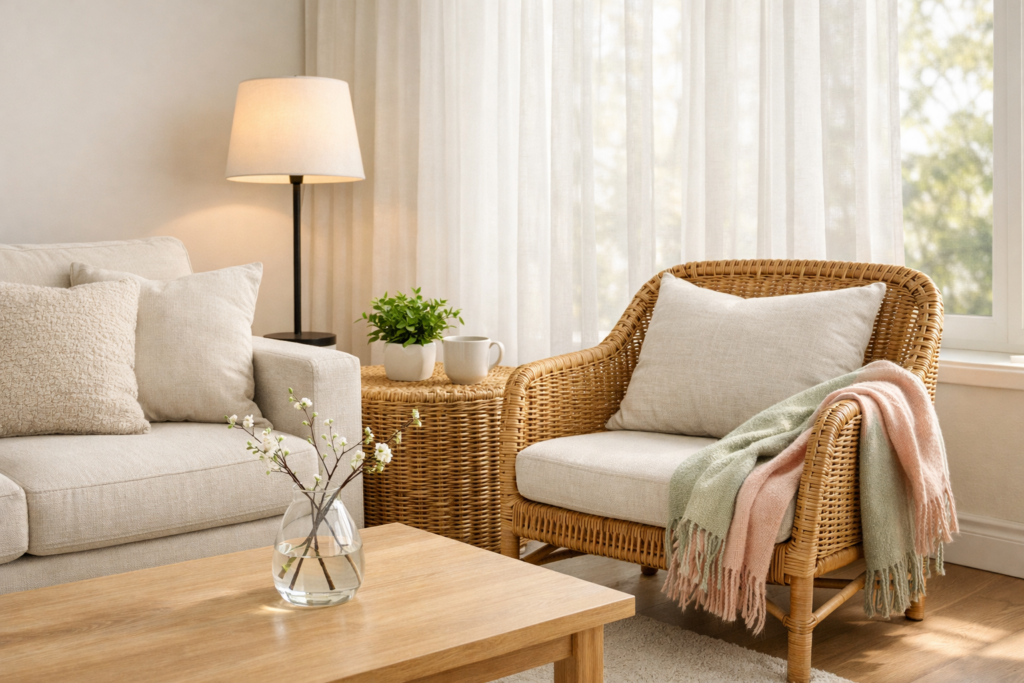
Add a rattan armchair or wicker side table to bring natural texture into your living room. These pieces warm the space without changing your color palette.
Choose a rattan sofa or bench with neutral cushions to keep the look modern and calm. You can layer a soft throw or a patterned pillow for a touch of color and comfort.
Place a woven coffee table or basket near seating to add function and style. Wicker pieces work well as plant holders, which boosts spring freshness.
Mix rattan with other materials like metal or glass to avoid a too-matched look. The contrast keeps the room feeling current and prevents the woven pieces from dominating the space.
Pick durable, well-made items if you plan to use them often. Look for tight weaving and sturdy frames so the furniture lasts through seasons.
5) Display fresh-cut spring flowers
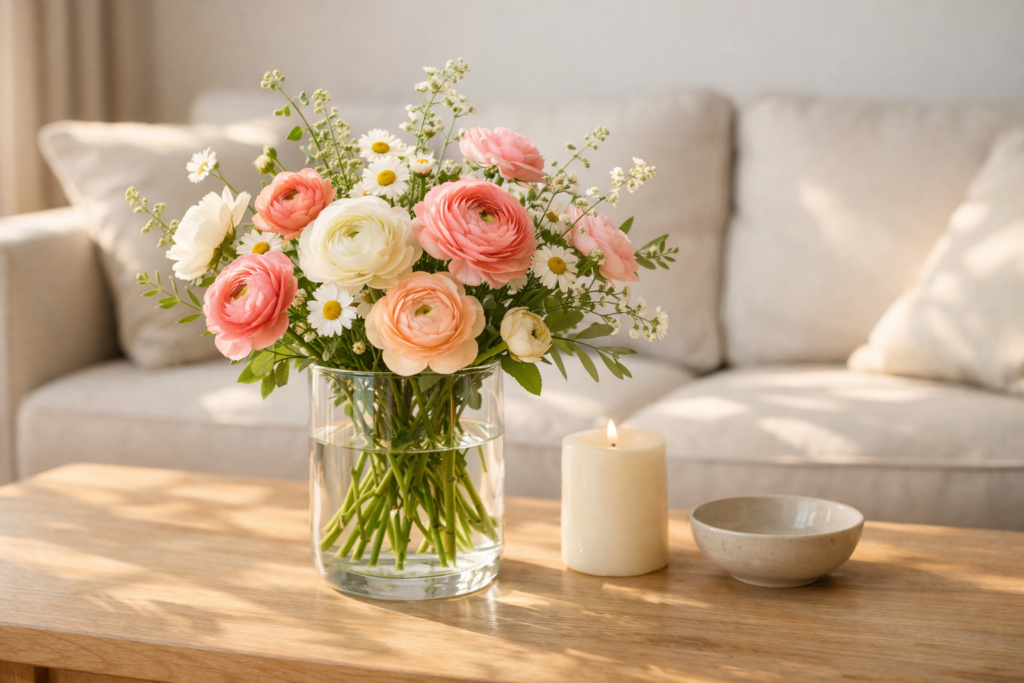
Choose a few simple blooms like tulips, daisies, or ranunculus. These flowers bring bright color without needing much fuss, and they last well in short arrangements.
Trim stems at an angle and change the water every two days. That keeps flowers fresher and reduces bacteria that can shorten their life.
Mix heights and textures for a more natural look. Place taller stems in the center or back of a vase, and shorter ones around the edges.
Use clear glass, a ceramic pitcher, or a small bucket as your vase. Different containers change the mood: glass looks clean, while a pitcher feels casual and cozy.
Pick locations that get indirect light, such as a coffee table, mantel, or side table. Direct sun will make blooms fade faster, so move them if they start to wilt.
Combine fresh flowers with sprigs of greenery or small branches. Greenery adds volume and helps arrangements look fuller without extra blooms.
Swap arrangements often to match the season’s changes. Rotate colors and flower types each week to keep your living room feeling fresh and new.
Keep a small vase by your entryway for single-stem displays. A single bloom can be as striking as a full bouquet and it’s easy to refresh.
If you want longer-lasting color, mix real flowers with a few high-quality faux stems. Use faux only where you need low maintenance, and keep real blooms where you want scent and natural texture.
6) Swap heavy rugs for jute or sisal mats
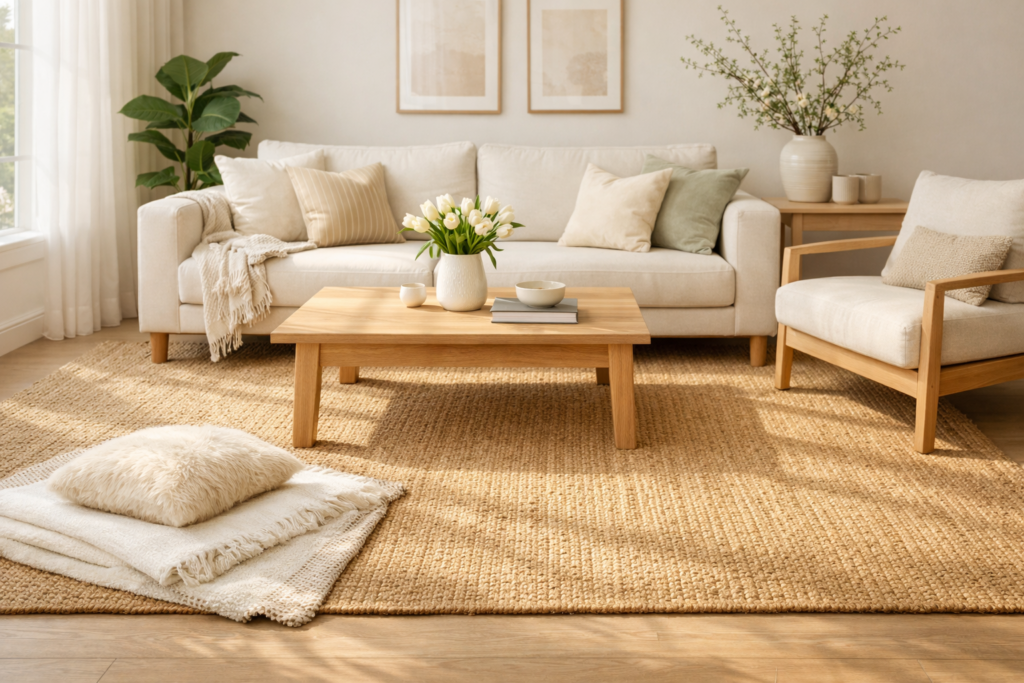
Switching out thick wool or synthetic rugs for jute or sisal instantly lightens your living room. Natural fiber mats have a low profile, so they let hardwood or tile show through and make the space feel airier.
Jute and sisal add texture without overwhelming your decor. Their neutral tones work with many color schemes, so you can keep existing furniture and pillows.
These rugs are durable and suit high-traffic areas like living rooms. They resist wear better than some delicate options, though they can feel rougher under bare feet.
Place a jute or sisal mat under a coffee table to anchor the seating area. Layer a small soft rug or throw where you want extra comfort, such as in front of a sofa or near a reading chair.
Clean them with regular vacuuming and spot cleaning when needed. Avoid soaking these fibers; instead, blot spills and air the mat to prevent mold and shrinkage.
Choose the right size and weave for your room. Tighter weaves look more formal, while looser textures read casual and relaxed — pick what matches your spring style.
7) Replace dark lampshades with linen ones
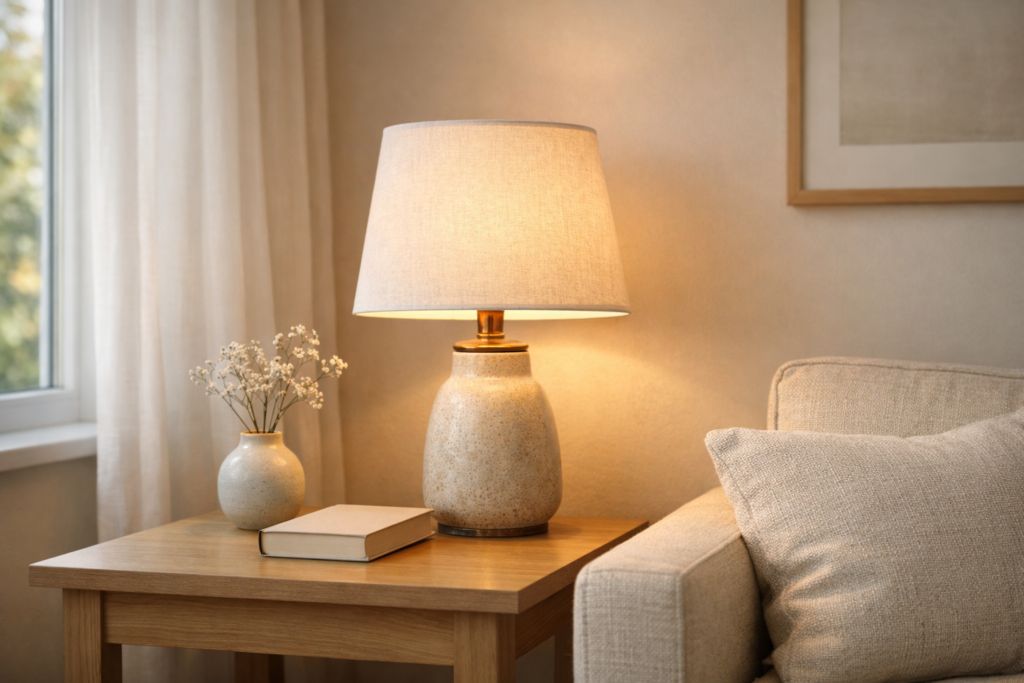
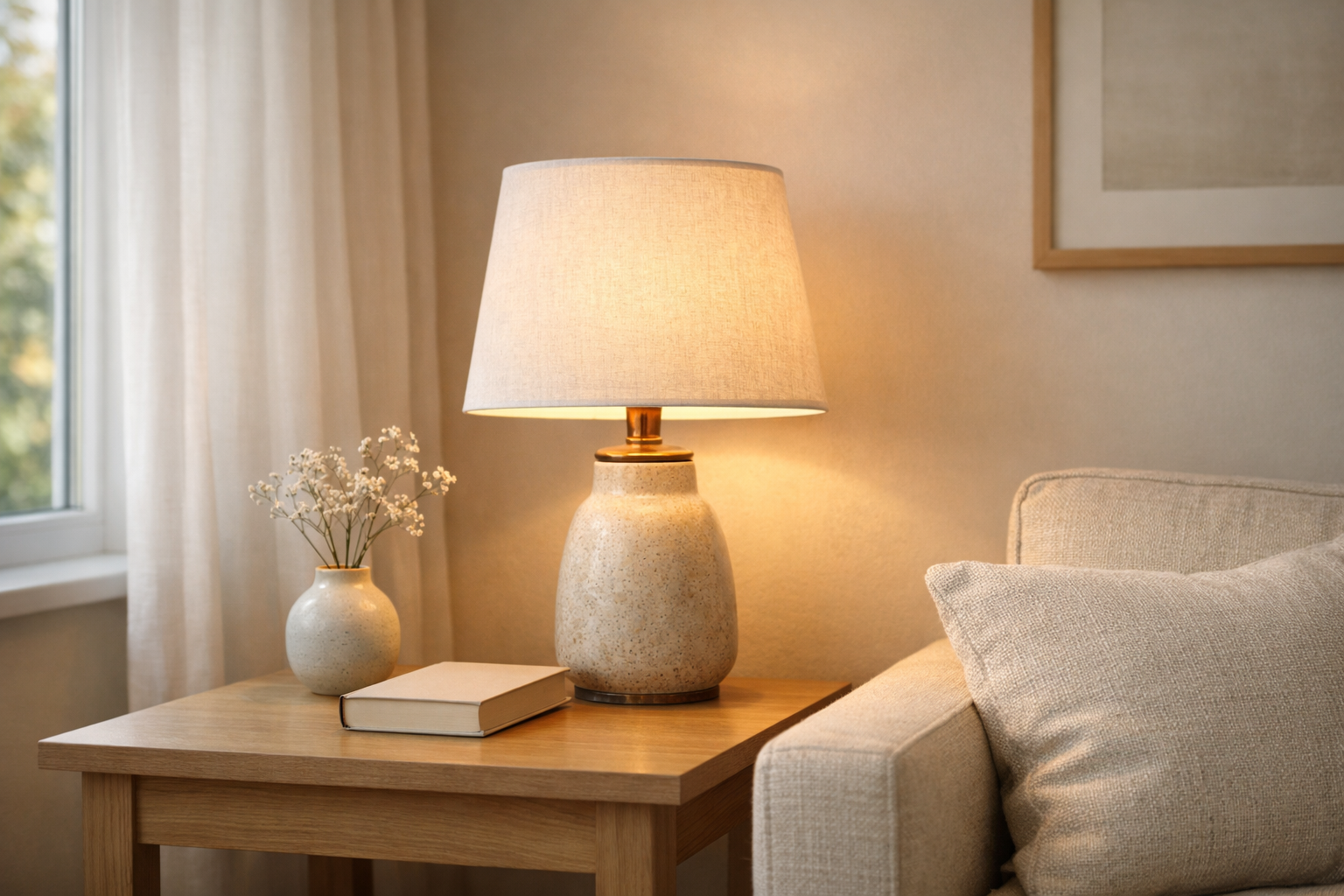
Swap dark, heavy lampshades for linen to lift the mood of your living room. Linen lets more light through, so lamps feel brighter without changing bulbs.
Linen shades soften light and create a warm, even glow. That helps corners look less stark and makes the room feel more open during spring evenings.
Choose neutral linen colors like off-white, beige, or pale gray to match most schemes. These tones work with pastels, wood accents, and green plants without competing for attention.
Pick a shade with a simple shape and clean edges to keep the look fresh. Drum and tapered shades both work; focus on size so the shade balances the lamp base and the furniture around it.
Linen also adds subtle texture that reads as natural and calm. That small tactile change makes the space feel less formal and more relaxed for daytime and night.
8) Hang botanical-themed wall art
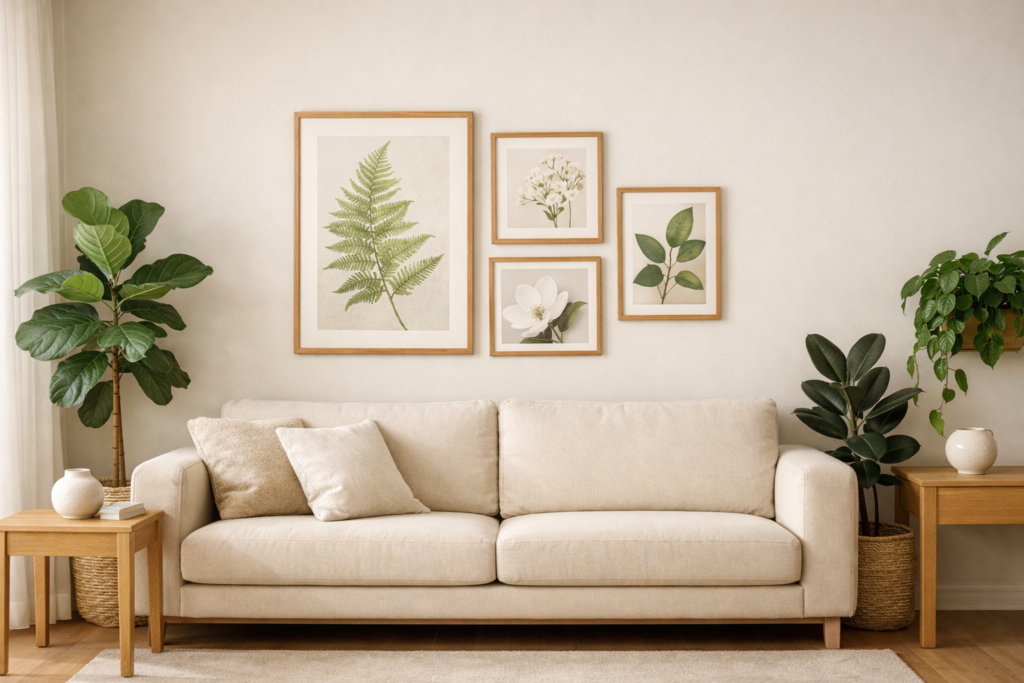
Choose pieces that match your room’s scale and color palette. A large print makes a bold focal point over the sofa, while a gallery of small frames adds a layered, collected feel.
Mix styles to keep the look fresh. Pair a detailed botanical illustration with a loose watercolor or a modern leaf print to create contrast without clutter.
Use different textures for depth. Framed prints, canvas art, and woven tapestries each catch light differently and make the wall more interesting.
Consider placement and height. Center artwork at eye level and leave breathing space around each piece so the room feels calm and balanced.
Rotate art with the seasons to refresh the space. Swap heavier, dark pieces for lighter floral or green-focused images when spring arrives.
Add a few three-dimensional elements. Small wall planters or wooden leaf sculptures complement flat art and reinforce the botanical theme.
Keep the framing simple to let the art shine. Neutral frames or thin black metal work well and let the colors in the prints stand out.
Use botanical art to tie the room together. Pull colors from pillows, rugs, or plants to create a unified, spring-ready living room.
9) Incorporate airy sheer curtains

Sheer curtains let in soft, natural light while still giving you some privacy. They make your living room feel brighter and more open without changing your layout or furniture.
Choose light colors like white, cream, or soft pastels to match spring’s fresh vibe. Subtle patterns or delicate embroidery can add texture without overwhelming the room.
Hang sheers from a rod placed close to the ceiling to make the room look taller. Floor-to-ceiling panels create a clean, elegant line that draws the eye upward.
Layer sheers with heavier drapes if you need more privacy or light control in the evening. You can pull the heavier curtains closed at night and keep the sheers drawn during the day for a soft glow.
Lightweight linen or polyester blends work well because they drape nicely and are easy to care for. Pick a fabric that moves gently with a breeze to enhance the airy, relaxed feeling.
Use simple hardware to keep the look uncluttered. Thin rods in a matte finish or slim tracks will keep the focus on the curtains and the light they bring into your space.
Mix sheers with pattern or color in other textiles, like throw pillows or rugs, to create balance. This keeps the room lively and coordinated without adding visual weight.
If you have sliding glass doors or large windows, sheers provide a practical solution that looks polished. They soften harsh sunlight while keeping your view and connection to the outdoors.
Keep maintenance in mind: choose machine-washable fabrics when possible. This makes it easy to freshen the curtains each season so your room always feels clean and bright.
10) Use a layered arrangement of light throws
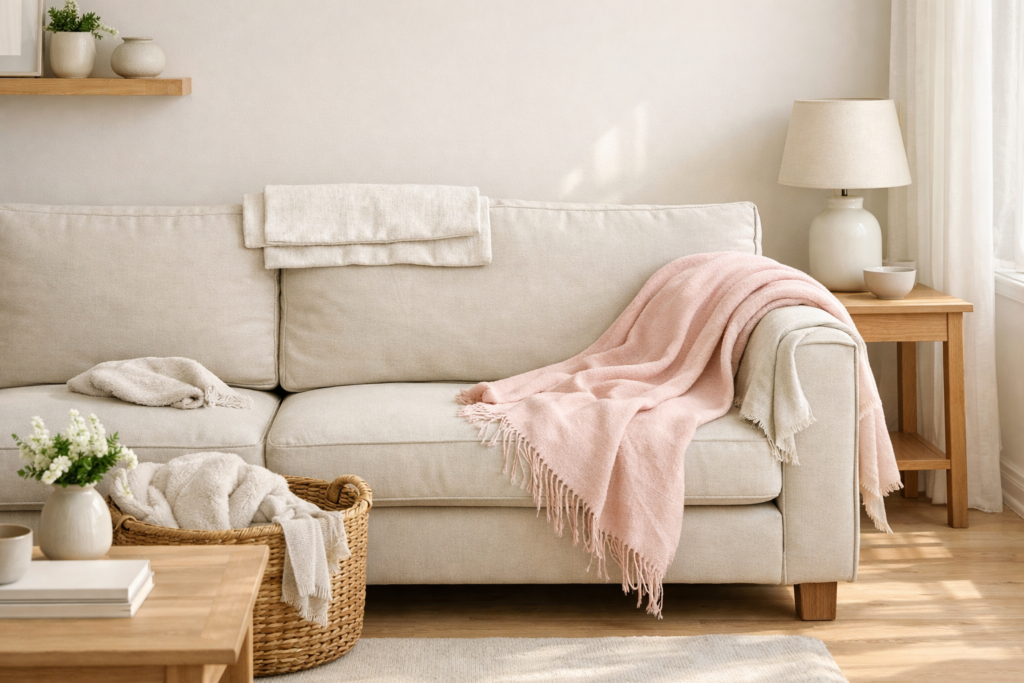
Drape a few lightweight throws over your sofa and chairs to add color and texture without the bulk of winter blankets. Choose cotton, linen, or thin knit fabrics in soft colors or simple patterns to keep the room feeling airy.
Layer different sizes and textures to create a casual, lived-in look. Fold one throw neatly across the back of the sofa, toss a smaller one over an arm, and let a third peek out from a basket for easy access.
Mix neutral bases with one or two brighter throws to add spring cheer without clashing. Stick to a small color palette so the layers look intentional and calm.
Use throws to change the mood quickly. Swap a bright pastel for a muted tone or switch textures between smooth and nubby to reflect the day’s light and your plans.
Keep throws within reach so you can use them for cool evenings or to soften seating for guests. Store extras in a woven basket or on a ladder for a tidy, decorative touch.
How to Incorporate Spring Colors in Your Living Room
Use light, fresh hues to lift the room, then add brighter accents for energy. Choose a main neutral, one or two spring shades, and repeat them in textiles, art, and small decor for a pulled-together look.
Color Psychology for Seasonal Interiors
Spring colors can change how you feel in the room. Soft greens and pale blues calm you and work well near seating or reading spots. Warm pastels like blush or butter yellow make social areas feel friendly and inviting.
Pick colors based on function. Use calming tones where you relax and more energetic colors where you want conversation or activity. Test paint chips in daylight and evening light to see true tones before you commit.
Limit intense colors to accents so they lift mood without overwhelming. A single bright pillow, a vase, or a framed print can trigger a feeling without crowding the space.
Tips for Balancing Bright and Neutral Tones
Start with a base neutral: warm white, soft gray, or pale beige. This keeps walls and large furniture from competing with spring hues. Then layer color through rugs, curtains, and throws.
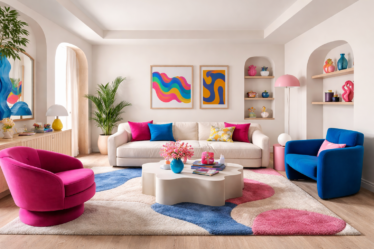
Follow the 60-30-10 rule: 60% neutral base, 30% secondary color (soft green or blue), 10% accent (coral, chartreuse, or fuchsia). This ratio keeps contrast pleasing and balanced.
Use texture to bridge tones. A woven rug or linen curtains in a neutral shade helps a bright cushion or lamp look intentional. If a bold color feels too strong, mute it with a patterned fabric that mixes the accent with neutrals.
Selecting Coordinating Accessories
Choose three types of accessories: textiles, greenery, and artwork. Textiles include pillows, throws, and curtains in your chosen palette. Pick one patterned item that combines your main colors to tie pieces together.
Use plants and flowers to add natural spring color and texture. Opt for easy-care plants like pothos or a potted fern, and swap in fresh-cut blooms for short-term pops of color.
Select two metal or ceramic finishes for hardware and small decor. Brushed brass pairs well with warm pastels; matte black or white ceramics suit cool, pale palettes. Group accessories in odd numbers for visual interest and keep scale varied so no area feels cluttered.
Styling Your Space With Seasonal Textures
Use soft, breathable fabrics and mix natural weaves with smooth surfaces to create a fresh spring feel. Add one or two textured accents to key spots like the sofa or coffee table to bring the room to life without clutter.
Lightweight Fabrics for Spring
Choose linen and cotton for sofa slipcovers, throw pillows, and curtains. Linen breathes well and shows casual wrinkles that read as relaxed, while cotton holds color and cleans easily. Pick neutral tones like warm white, soft beige, or pale gray, then add one accent pillow in pastel green or blush for a seasonal pop.
For curtains, opt for sheers or lightweight cotton panels hung high and wide to let in more light. On seating, swap heavy winter throws for thin knit or gauze blankets you can fold on the armrest. These fabrics dry quickly and resist musty odors after spring cleaning.
Layering Techniques for Visual Interest
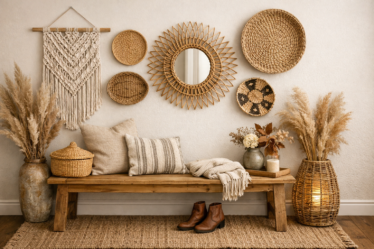
Start with a base of smooth surfaces: a leather or tight-weave sofa, a simple rug, and bare wood or stone tables. Then add a woven jute rug or seagrass runner to introduce natural texture underfoot without overwhelming the room.
Layer pillows in three sizes—large neutral back cushions, medium patterned pillows, and one small textured accent. Use a thin throw draped diagonally across the sofa for a casual look. On the coffee table, place a ceramic tray with a small woven basket and a vase of fresh greenery to tie textures together.